| the brief by federal attorneys last month. The court case first started when the ACCG imported ancient Chinese and Cypriot coins through Baltimore, Maryland without a permit in an effort to challenge import protections put in place by the Cultural Property Implementation Act (CPIA). The case is now on appeal in the Fourth Circuit after the ACCG lost in the lower federal district court. The judiciary possesses the authority to review implementation of import controls over listed Chinese and Cypriot ancient coins coming into the United States. That is what the ACCG contends in its legal brief. The organization summarizes its position in the argument title: "The District Court Possessed Ample Authority to Review the Government's Decision to Impose Import Restrictions on Collectors' Coins." The group casts the controversy as a contest between "collectors' coins," which are of interest to the organization's small numismatic businesses and hobbyists, versus "serious substantive and procedural irregularities" on the government's part. It complains that "[t]he Government … insists that its efforts to suppress the long-standing trade in common collectors' coins is either a foreign policy matter or one fully committed to agency discretion, leaving the Guild and the small businesses and collectors it represents without recourse." The group challenges authorities who believe they are "empowered to seize any undocumented coin that 'likely' was found in either Cyprus or China, notwithstanding explicit statutory language [in the Cultural Property Implementation Act] to the contrary." The ACCG's brief levels "serious allegations," claiming that US State Department staff "worked behind-the-scenes with members of the archaeological lobby to orchestrate a change in existing precedent exempting coins from import restrictions ...." and that "staff added coins to the Chinese import restrictions without a formal request from Chinese officials." The ACCG also alleges that an undersecretary of state "ordered [Cypriot] import restrictions … as a 'thank you' to Greek and Cypriot-American advocacy groups which had given him an award" and that an assistant secretary of state "did not recuse herself from approving the 2007 extension of the Memorandum of Understanding (“MOU”) with Cyprus after she had accepted a new position with an international financial institution that likely has business interests with Cyprus …." The group additionally claims that the "State [Department] then misled Congress and the public about CPAC's true recommendations against import restrictions on coins." CPAC is the Cultural Property Advisory Committee that advises the president about adopting import controls over cultural property in jeopardy from pillage. The ACCG's brief further "alleges that the Government: (1) confused 'cultural significance' with 'archaeological significance' when it comes to objects that exist in multiples, like coins; (2) ignored evidence that Cypriot and Chinese coins circulated widely beyond their place of manufacture such that the 'first discovery requiremen'’ could not be met; (3) ignored or misapplied the CPIA’s requirements that less drastic measures like treasure trove laws or regulation of metal detectors be instituted before imposing restrictions; (4) ignored or misapplied the CPIA's 'concerted international response requirement;' and (5) wrongfully imposed import restrictions on coins without regard to their find spots." The group argues that "the court has an obligation to ascertain whether coins were properly designated for restriction." That is, in part, because "CBP [Customs and Border Protection] acted in an arbitrary, capricious, or illegal manner under the APA [Administrative Procedures Act] when it allowed [the] State [Department] to assume authority over the preparation of the designated [import control] List." The ACCG contends that it took action in court, not because it did not follow the rules as federal lawyers assert, but because the federal government failed to file a forfeiture action. The organizations says in its brief that the "Government’s claim that a forfeiture action provided an adequate remedy for the Guild borders on the Kafkaesque." Note: Citations of authorities contained in the original ACCG brief are omitted from the quotes above. CONTACT: www.culturalheritagelawyer.com Sumber http://thetrialwarrior.blogspot.com/ Seize and Send v. Investigate and Indict: Focusing on Cultural Heritage Criminal Investigations and Prosecutions
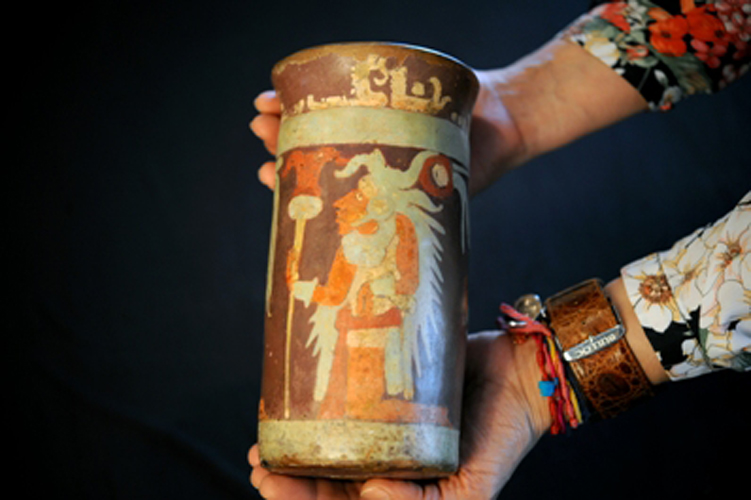
Authorities are to be lauded for detecting and seizing illegally imported archaeological objects. But the claim that federal officials are continuing their investigation remains to be seen. That is because the primary evidence of possible smuggling has now been returned to Guatemala. The artifacts are no longer preserved for criminal analysis, they are not kept in safekeeping for use in court proceedings, and they are not available for inspection by potential criminal defendants who have a constitutional right to view the government’s evidence in a criminal case. There appears to be no US Attorney involvement in this case, which is a sign that the matter likely is not being reviewed for possible criminal charges. And Homeland Security does not mention in its official press release that it is pursuing a criminal investigation. At best the agency cautions that “[t]hose involved in the illicit trafficking of cultural property, art and antiquities can face prison terms of up to 20 years, fines and possible restitution to purchasers of the items.“ Those who follow cultural property cases closely are aware that Homeland Security generally implements a seize and send policy with regard to cultural artifacts. While the agency boasts in its latest press statement and elsewhere that “[s]ince 2007, HSI [Homeland Security Investigations] has returned more than 2,500 artifacts to 23 countries …”it is silent about successful cultural property prosecutions. Such prosecutions are rare. The Cultural Property, Art and Antiquities Investigations Program is carried out by HSI. The agenda describes its mission on ICE’s web site: “Returning a nation’s looted cultural heritage or stolen artwork, promotes goodwill with foreign governments and citizens, while significantly protecting the world’s cultural heritage and knowledge of past civilizations.” The emphasis is on sending cultural objects to home countries, not on developing cases for criminal prosecution. It could very well be that the lack of financial or human resources prevents the development of cultural property smuggling cases. It could be too that politics affects agency decision making. Indeed, it may be noteworthy that on the same day of the repatriation of artifacts to Guatemala, Homeland Security Secretary Janet Napolitano announced that she would be traveling to Guatemala City and other Latin American destinations between February 27 and 29. Perhaps prosecutors are rejecting these cases for review. Whatever issue prevents ICE from doing its job to investigate and prepare cases for presentation to a federal grand jury and subsequent criminal prosecution must be resolved. ICE Director John Morton is right to note “the exceptional investigative work HSI is doing to stop the pilfering and illicit trading of precious art and antiquities from around the world.” ICE has talented investigators. But more must be done to bring the talents of these federal agents to the next level so that their cases serve to provide a meaningful deterrent to archaeological smuggling. Investigators must be permitted to conclude their cases by submitting them to receptive US Attorneys for review and possible indictment. Cases concluded through seizure, forfeiture, and repatriation alone do not have a similar impact on criminal activity. Sources: Homeland Security press releases http://www.ice.gov/news/releases/1202/120224washingtondc.htm http://www.dhs.gov/ynews/releases/20120224-statement-on-napolitano-trip-to-central-america.shtm WJV TV http://baltimore.cbslocal.com/2012/02/24/stolen-ancient-mayan-artifacts-being-returned-to-guatemala/ CONTACT: www.culturalheritagelawyer.com
Subscribe to:
Posts (Atom)
|
Advertisiment
Kategori
10th Ct. of Appeals
11th Ct. of Appeals
13th Ct. of Appeals
4th Amendment
5th Amendment
5th Circuit
5th Ct. of Appeals
6th Ct. of Appeals
8th Ct. of Appeals
admiralty and maritime law
Ancient Coin Collectors Guild (ACCG)
ancient coins
Armenia
Arnold Peter Weiss
art theft
Baltimore coin case
Barry Landau
Booking-Question Exception
Burlgary
Cambodia
Charging Instrument
Child Sexual Assault
Confession
Convention on International Trade in Endangered Species of Wild Fauna and Flora (CITES)
Criminal Record
Criminal Trespass
Cultural Property Advisory Committee (CPAC)
Cultural Property Implementation Act (CPIA)
Custer Museum
Custodial
Dallas Museum of Art
Dallas-Fort Worth Criminal Defense
Defense of Others
Dismissal
Egypt
Endangered Species Act
Evidence
Expunctions
Factual Sufficiency
Felon in Possession
Foreign Sovereign Immunity Act (FSIA)
forfeiture actions
Funny Stories
Getty
Greece
Guatemala
Habeas Corpus
historical documents theft
Immigration and Customs Enforcement (ICE)
immunity from seizure
International Council of Museums (ICOM)
Iran
ivory
Jason Savedoff
Joshua Knelman
Kazakhstan
Knock and Talk
Lacey Act
LACMA
Legal Sufficiency
legislation
Legislature
lesser-included offenses
Mali
mediation
Medical Care Defense
memorandum of understanding (MoU)
Mexico
Military
Miranda
Montejo
Murder
museums
National Stolen Property Act (NSPA)
Nazi stolen art
Non-Disclosure
Odyssey Marine
Peru
Polygraph
Pre-Trial Motions
prosecutions
Prosecutor Post
receiving stolen property statutes
Red Lists
repatriation
replevin action
Rubin v. Iran
Search and Seizure
seizure
Self-Defense
Self-Incrimination
Sentencing
Sex Offender
Sexual Assault
Social Media
Sotheby's
Spain
St. Louis Art Museum (SLAM)
State Department
Suppression
Tex.Crim.App.
Traffic Tickets
Traffic Violation
U.S. Supreme Court
underwater archaeology
US v. Gordon
US v. Khouli et al.
Variance
Warrant
Wrongful Conviction
Zeyt'un Gospel
Showing posts with label Immigration and Customs Enforcement (ICE). Show all posts
Showing posts with label Immigration and Customs Enforcement (ICE). Show all posts